
Gabrielle Gambrell on AI in Communications
As Chief Communications Officer of Hachette Book Group (HBG), and the first Black woman and youngest to hold the title at a Big Five publishing house, I am often asked about AI’s impact on media and communications.
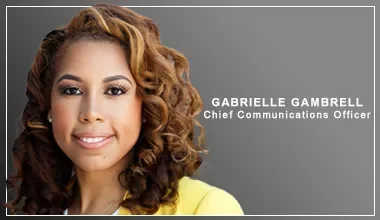
I spoke to Ragan Communications about serving as HBG’s inaugural Chief Communications Officer, which is a part of Hachette Livre, the world’s third-largest trade and educational publisher that celebrated its 200th anniversary in 2026.
You can find the full interview here and more of my thoughts on AI below.
We are constantly talking about AI, asking about AI, and AI will continue to impact how audiences discover, interpret, and decide what to trust.
AI generates content, summarizes data, and it increasingly serves as an intermediary between organizations and their audiences. This means that communicators must think beyond traditional media impressions and social engagement and ask: How will our story, our reputation and our credibility survive in this new and evolving AI world?
Communication fundamentals will never change. Effective communication is a vital strategic skill and moreover an art form. The art of trust, storytelling, crisis communications, issues management, executive communications, publicity, events, branding, and media relations -- our communications core -- will always matter. Communicators will continue to pair our core fundamentals with technology just as we always have.
Transparency must remain a key element of communication. People should not have to guess whether they are interacting with a human or an AI system, particularly when the interaction involves important information, customer service, or decisions that personally affect them. Today, transparency alone isn't enough, and trust is built through consistency, authenticity, and accountability. If an organization says something, its actions must reinforce that message.
If AI is involved in communicating on the organization's behalf, there still needs to be a human being that is accountable for both the information and the experience. We must never forget about human experiences! Humanity at its core will always matter the most, and this is where communicators have a particularly influential role. We are storytellers, but we are also stewards of reputation and trust. Technology can help us communicate faster and at a greater scale, but it does not eliminate the necessity for human judgment, authentic relationships, and corporate responsibility.
Communications teams must think about what happens when someone asks an AI assistant, “What does this company stand for?” or “Can I trust this brand?” because that answer will be generated from an ecosystem of news coverage, social content, company information, employee commentary, and other emerging digital signals. More than ever, teams must audit their digital footprint, strengthen authoritative sources of information, develop clear organizational narratives, and think about how they monitor and respond to AI-generated summaries or interpretations of their organization that are damaging or inaccurate. AI competency will become a standard for corporate sustainability as some companies are currently creating systems for AI literacy. Not all must become technologists; however, every communicator should strive to understand emerging and impactful technology. Tech literacy and innovation have always been key to business growth.
The biggest thing on my radar is the continued convergence of communications, integrated marketing, content creation, technology, and personal brand. The gatekeepers haven't disappeared, but the number of ways we can tell our own stories has exploded. LinkedIn, my favorite social media platform gives professionals and organizations the ability to publish directly to highly targeted audiences using video and visual storytelling. It allows brands and organizations to engage in real time and moreover learn from data analytics. At the same time, earned media remains incredibly valuable because there is tremendous power in someone else choosing to tell your story to their audience.
The strongest communications strategies will use original storytelling and content creation along with earned media. Regardless of how much technology changes, one constant remains: relationships matter. Relationships with reporters, creators, influencers, customers, consumers, employees, colleagues, and communities create credibility that technology alone cannot manufacture.
As an educator, a parent, and strategist, I love thinking a lot about the next generation of communicators. As a Board member of my alma mater Iona University, I stay close to students and always think about how we prepare them for an industry that is evolving so rapidly. I hold an undergraduate degree in Television, Radio, and Film, as well as a masters in Sports and Entertainment Communications and today the industry is all about content and platforms. Most of my students at Columbia and New York University (NYU) do not even own a television – yet content has and will forever be key. I teach students that they must remain students, always. I am honored to be a constant student and that has never been more important in order to be an expert in today’s world of communications. Technology will continue to change, but our responsibility as communicators is to remain curious, learn, and use innovative tools to tell better, more meaningful, and more impactful stories.